The Daintree River
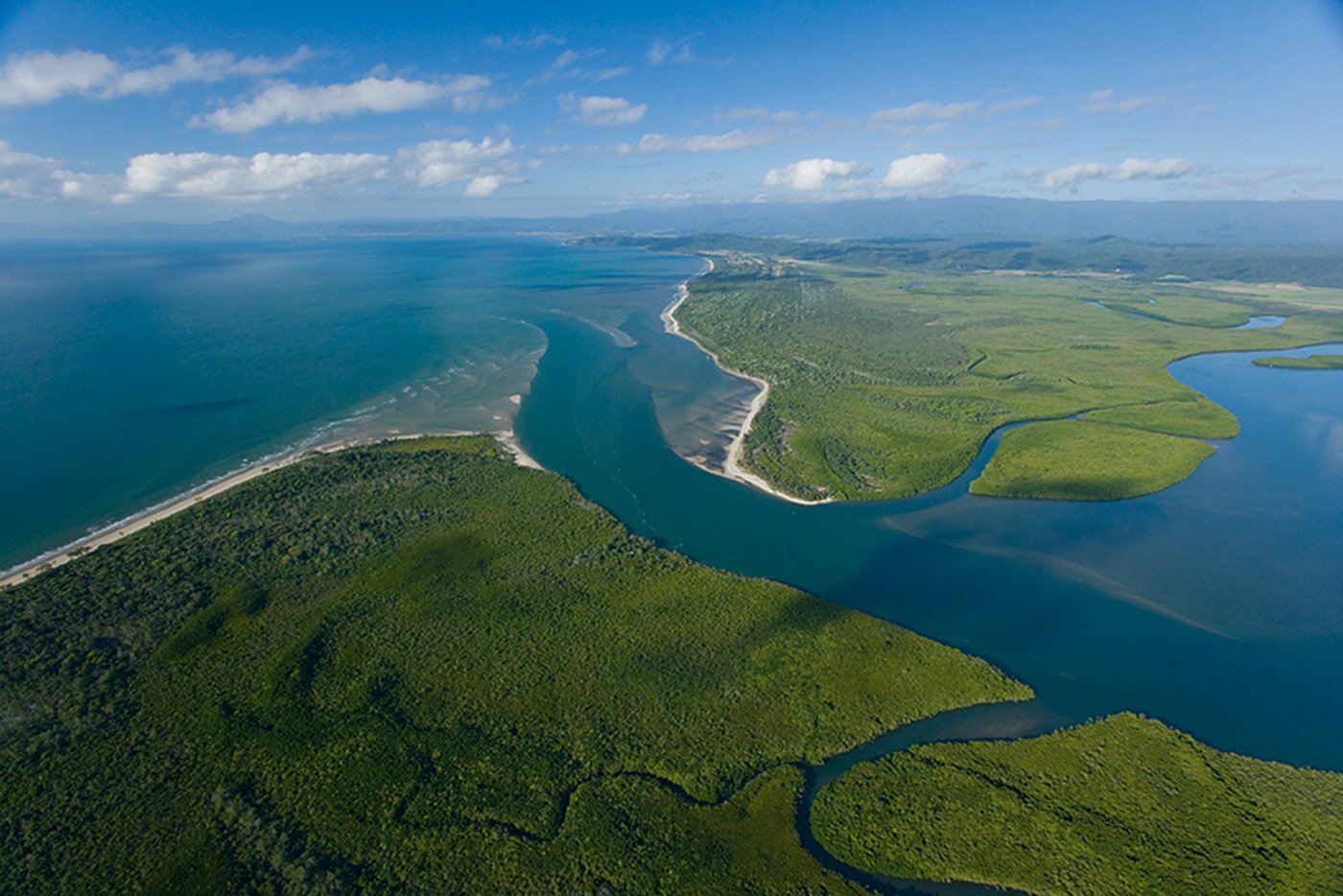
The Daintree River is a unique waterway in the World Heritage-listed Wet Tropics of Queensland. It is the heartbeat of the oldest rainforest system in the world.

Daintree River Overview
Situated roughly 45 kilometres north of Port Douglas, about 100 kilometres north of Cairns, and 40 kilometres south of Cape Tribulation, the Daintree River winds through one of Queensland’s most pristine natural environments. The river begins on the slopes of the Great Dividing Range within the Daintree National Park, just below Black Mountain, at an elevation of around 1,270 metres. From there, it follows a winding course that first flows north, then east and south before turning east again, passing through dense rainforest where the water remains fresh and teeming with aquatic life.
Two smaller tributaries feed into the Daintree before it continues through the Cairns Marine Park. In this lower section, the river travels through extensive mangrove swamps where the water becomes salty before emptying into the Coral Sea. At the mouth of the river, shifting sandbars reshape the delta with each changing tide. Over its 127-kilometre journey, the Daintree descends about 1,270 metres and drains a catchment area of approximately 2,100 square kilometres, including more than 30 square kilometres of estuarine wetlands.
Landscape and Environment
The river is framed by steep rainforest-covered mountains and deep valleys. Visitors are drawn to the region for its ancient vegetation, dramatic scenery, and remarkable biodiversity. With no bridge across the river, a cable ferry provides a unique means of crossing — a notable attraction for tourists. Surrounding landmarks include Black Mountain, the Daintree Range, Thornton Peak, and the Cape Tribulation rainforest. The area supports an extraordinary variety of tropical species, both plant and animal, many of which are found nowhere else on Earth.
Cultural Heritage
The traditional custodians of the Daintree region are the Kuku Yalanji people, who lived along the riverbanks for thousands of years. They were hunter-gatherers, typically living in small family groups of eight to twelve individuals, and relied on the rainforest for food, materials, and shelter. Their diet consisted of local “bush tucker” — edible plants, fruits, and animals from the surrounding forest. Archaeological evidence suggests that the Kuku Yalanji have occupied the Daintree River region for more than 9,000 years, maintaining a deep spiritual and cultural connection to the land and waterways.
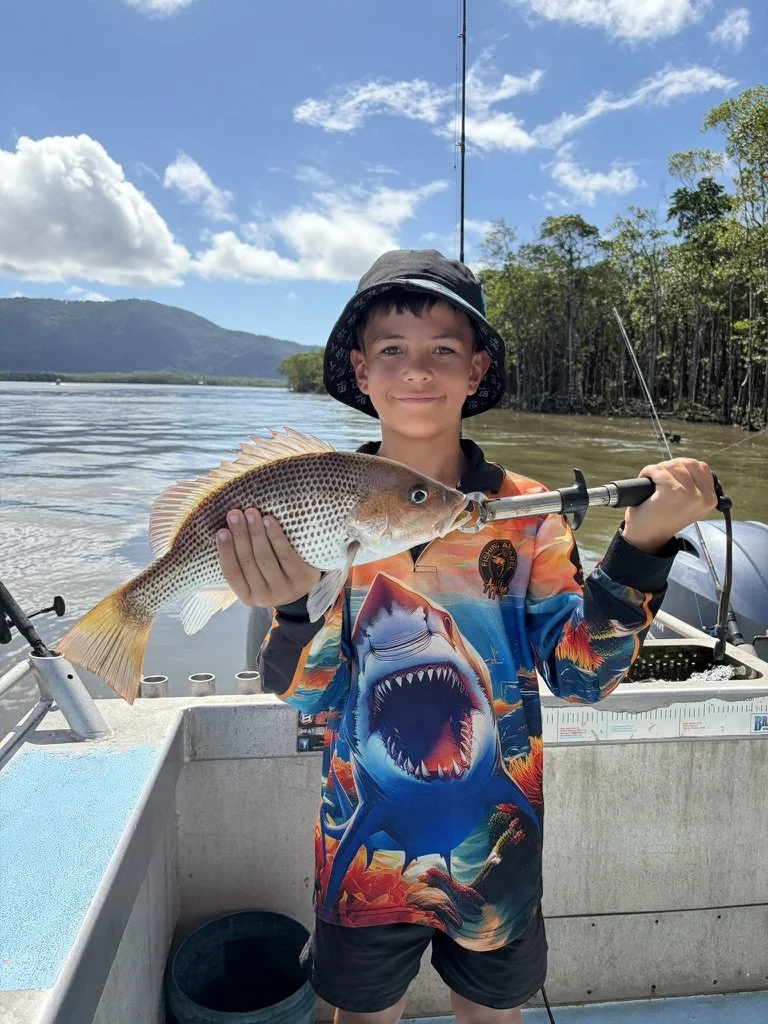
Where we fish:
Upper River Fresh Waters
Target species: Barramundi, mangrove jack, archer fish, tarpon
Middle River Brackish Waters
Target species: Barramundi, mangrove jack, trevally, tarpon
Lower River Salt Waters & Estuaries
Target species: Barramundi, mangrove jack, big queenfish, various bigger trevally species, javelin fish, mud crabs
River Entrance
Target species: Big queenfish, various trevally species, school mackerel